Planning your first trip to Central Vietnam? The coastal corridor between Da Nang, Hoi An, and Ba Na Hills is known for friendly locals, world-class UNESCO heritage, and incredible street food. To ensure your vacation is seamless, safe, and stress-free, here are the most essential Vietnam travel tips for 2026 from our local drivers and tour leaders.
1. Da Nang Airport Arrival Tips
- SIM Cards & eSIM: You can purchase a local 4G/5G SIM card (Viettel, Vinaphone) at airport kiosks for roughly 200,000–300,000 VND ($8–$12 USD). Alternatively, install an eSIM before departure.
- Currency Exchange & ATMs: Airport exchange booths often offer lower rates than gold shops in downtown Da Nang (such as Hieu Vang Kim My or Tam Thao on Hung Vuong street). Exchange a modest amount ($50) for immediate needs, then withdraw VND from trustworthy international bank ATMs (BIDV, Vietcombank, Techcombank, HSBC).
- Exiting the Terminal: Ignore aggressive touts inside arrivals offering “taxi cheap my friend”. Proceed directly to the pre-arranged driver meeting point or official taxi stands.
2. Transport & Getting Around Safely
- Always pre-book long-distance transfers: For the 30 km journey to Hoi An, pre-booking a private car with dananghoiantrips is 20–30% cheaper than metered airport taxis and protects you against surge fares during rainstorms.
- Walking in Hoi An Ancient Town: The ancient core is closed to motorized vehicles every day from 09:00–11:00 and 15:00–21:30. Rent a bicycle from your homestay or enjoy peaceful walking.
- Crossing the Street: Traffic in Vietnam can feel overwhelming at first. The golden rule is: walk with steady, predictable pace. Motorbike drivers calculate your trajectory and steer smoothly around you. Never step backward suddenly or run!
3. Food & Dining Etiquette
- Drink bottled or boiled water: Tap water in Vietnam is not potable. Reputable hotels and dananghoiantrips vehicles provide complimentary sealed mineral water.
- Street Food Rule of Thumb: Choose stalls crowded with local families and where ingredients are cooked boiling-hot in front of you (such as Pho, Cao Lau, and hot Banh Mi).
- Vegetarian & Halal Dining: Hoi An has a vibrant vegetarian Buddhist culture (“Quan Chay”). Look for signs that say An Chay on the 1st and 15th of the lunar month.
4. Weather & Packing Essentials
| Season | Months | Weather Conditions | What to Pack |
|---|---|---|---|
| Dry & Cool (Best) | Feb – Apr | Sunny, gentle breeze, 22°C–28°C | Light cotton clothes, sneakers, sun hat |
| Hot Summer | May – Aug | Very sunny, hot, 32°C–38°C | Sunscreen, swimwear, sunglasses, handheld fan |
| Rainy / Monsoon | Sep – Jan | Intermittent heavy rain, cooler, 19°C–24°C | Light rain jacket, umbrella, waterproof bag |
5. Temple & Heritage Etiquette
When visiting pagodas (Chua Cau, Linh Ung, Hoi Quan Phuc Kien) or royal monuments in Hue, dress respectfully with shoulders and knees covered. Remove hats and sunglasses before stepping across the wooden threshold into sacred prayer halls.
7. Month-by-Month Weather & Best Time to Visit Hoi An
Hoi An enjoys a tropical coastal climate divided into two distinct seasons: the dry season (February to August) and the rainy season (September to January). Planning your itinerary around these seasonal patterns helps you combine beach relaxation with lantern-lit heritage walks.
- February to April (Spring Peak): Daytime temperatures hover between 24°C and 29°C with low humidity, gentle breezes, and clear blue skies. This is the ideal window for cycling through Tra Que Herb Village, walking the Ancient Town, and taking basket boat rides in Cam Thanh.
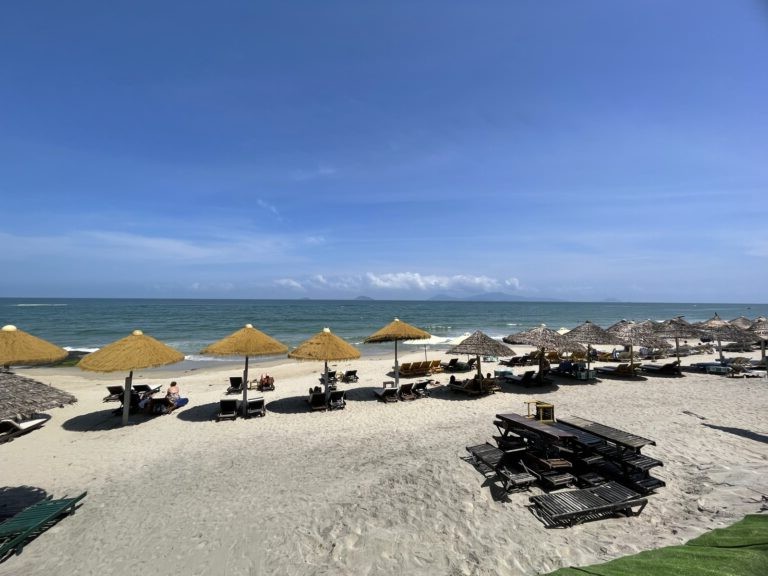
- May to August (Summer Beach Season): Sunny skies and calm turquoise waters make An Bang Beach, Ha My Beach, and the Cham Islands (Cu Lao Cham) irresistible for swimming and snorkeling. Schedule Ancient Town walking tours before 09:30 or after 16:00 to avoid the midday heat.
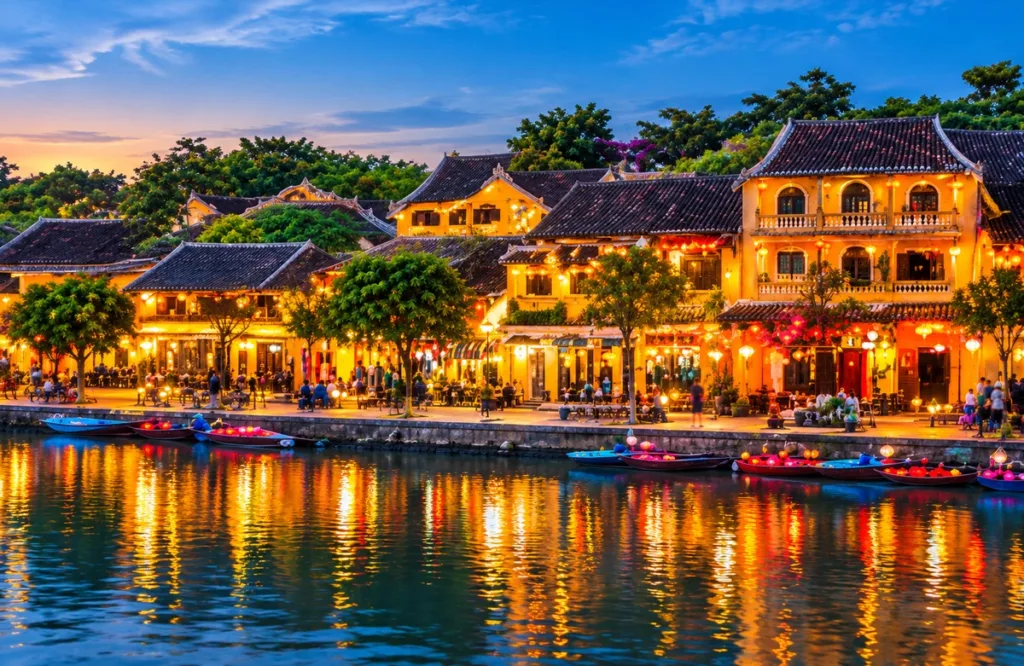
- September to January (Romantic Lantern & Cultural Season): Brief tropical showers bring cooler air and fewer crowds. Keep a light raincoat handy, enjoy cozy riverside cafes, and coordinate door-to-door private car transfers so your luggage stays completely dry.
8. Must-Try Hoi An Culinary Specialties & Where to Eat
No trip from Da Nang to Hoi An is complete without sampling the town’s world-famous culinary heritage:
- Cao Lau Noodles: Thick, smoky rice noodles topped with char siu pork, crispy square croutons, fresh Tra Que herbs, and a savory broth reduction.
- Hoi An Banh Mi: Crispy baguettes filled with house-made pate, roasted pork, pickled papaya, and chili sauce at Banh Mi Phuong or Madam Khanh.
- Com Ga Pho Co (Hoi An Chicken Rice): Fragrant turmeric rice served with shredded free-range chicken, Vietnamese coriander, and green papaya salad.
- White Rose Dumplings (Banh Bao Banh Vac) & Fried Wontons: Delicate translucent shrimp dumplings steamed to perfection alongside crispy wonton Nachos.
9. Recommended 1-Day & 2-Day Hoi An Itineraries
Option A – Classic Half-Day Afternoon & Night Tour from Da Nang (14:00 – 21:00):
- 14:00: Private car pickup at your Da Nang hotel; stop at Cam Thanh Seven-Acre Coconut Forest for a 50-minute bamboo basket boat ride.
- 16:00: Enter Hoi An Ancient Town; visit the Japanese Covered Bridge, Phuc Kien Assembly Hall, and Tan Ky Old House.
- 18:00: Enjoy Cao Lau and Chicken Rice for dinner, followed by a 20-minute sampan boat ride to release floating paper lanterns on the Hoai River.
- 20:30: Stroll the Nguyen Hoang Night Market before your private driver brings you comfortably back to Da Nang.
Option B – Relaxed 2 Days 1 Night Heritage & Beach Escape: Combine Day 1 in the Ancient Town and Hoi An Memories Show with an early Day 2 excursion to UNESCO My Son Sanctuary or a sunny morning at An Bang Beach before returning to Da Nang International Airport.